How Often Should a Coated Garage Floor Be Cleaned and With What
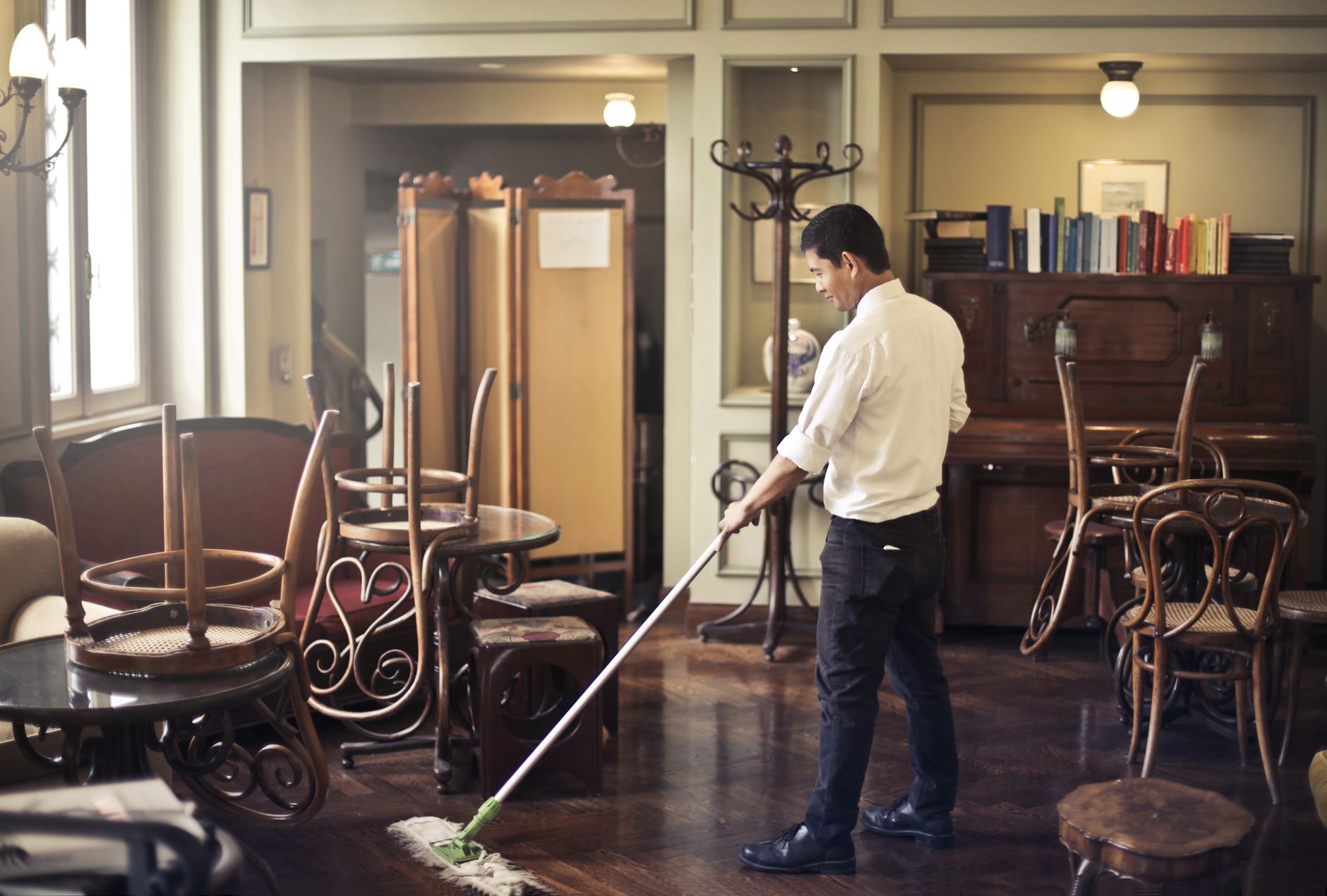
A coated floor stays good-looking when the grit comes off it before the grit is walked into it. Dust, tire residue and soap film do more harm to a topcoat than any single spill, and in Riverside, CA the dust never really stops. Dry summers, Santa Ana wind days and irrigation overspray all deposit something on a garage or shop floor, and each deposit calls for a slightly different response. Nothing on this list needs special equipment. It needs a routine, a soft head on the mop, and a bit of attention to what is actually sitting on the surface.
How often should an epoxy floor be cleaned?
An epoxy floor should be swept or dust-mopped every week and damp-mopped every month. Weekly sweeping removes the abrasive particles before shoes and tires grind them into the topcoat. The monthly mop picks up the film that sweeping leaves behind, such as dried drips of oil, spray from the street and tracked-in clay. A floor that sees a car every day, or a workshop where someone works most evenings, benefits from a second mop mid-month.
The cleaning solution matters less than the pad. A microfiber head or a soft nylon pad cleans a gloss topcoat without scratching it. Stiff bristle brushes and rough scrub pads leave fine swirl marks that catch the light and make a new floor look old within a season.
What cleaners are safe on a coated slab?
The safe cleaners are plain warm water, a few drops of dish soap, and a mild pH-neutral floor cleaner. Each of these lifts dirt without dissolving the film. Harsh degreasers, ammonia-heavy glass cleaners and citrus-based solvents can soften a urethane or polyaspartic topcoat if they sit for more than a few minutes, and the dull patch that results does not come back.
- Warm water and a little dish soap suit everyday grime and the monthly mop.
- A pH-neutral cleaner suits floors with a satin or matte finish, where soap residue shows as haze.
- A diluted degreaser belongs only on oil spots, and it should be rinsed off completely.
- Bleach and acid-based cleaners should stay off the floor, since they attack the resin at the surface.
Whatever is used, a final rinse with clean water and a dry towel pass keeps film from drying into streaks. Standing water in a low spot is worth sponging up, particularly under a floor drain lip.
How is each stain handled?
Each stain has a different cause and a different fix, and the table below lines up the common ones found on garage and workshop floors.
| Stain | What it usually is | What works |
|---|---|---|
| Dark ring under a tire | Tire residue and road oil | Warm soapy water and a soft pad, then rinse |
| Rust-colored mark | A steel can or jack stand that sat damp | Lift the item, wipe with a mild cleaner, dry the area |
| White chalky ring | Hard water from a leak or hose | Vinegar diluted well in water, wiped fast and rinsed |
| Oil patch | Motor oil or hydraulic fluid | Absorbent granules first, then a diluted degreaser |
| Yellow cast | Sunlight on the resin near a window or door | Cannot be cleaned off; a clear coat renews it |
Speed beats strength with nearly every stain. A spill wiped within the hour almost never marks a cured floor, and a spill left for a week often needs the topcoat refreshed over that area.
What does a Riverside summer do to the surface?
A Riverside summer bakes dust onto the coating and makes the surface hot enough to soften any rubber that rests on it. Garages across Riverside County can climb well past outdoor temperature by late afternoon, and a warm topcoat is a softer topcoat. Tires that sit still on it all day can transfer rubber and leave a ghost of the footprint. A mid-summer damp mop clears the film, and parking in a different spot now and then spreads the heat load around.
The same heat dries wet spills quickly, which sounds helpful and is not. A puddle of cleaner that dries on the floor leaves a ring of its own residue. Mopping in the cooler part of the day, and rinsing before anything has the chance to dry, avoids that.
How should wind dust and irrigation spray be handled?
Wind dust is handled with a doormat at the entry and a dry sweep before any wet cleaning, and irrigation spray is handled by wiping the threshold after sprinklers run. Santa Ana days push fine silt through gaps in a garage door, and that silt acts like sandpaper under a sole. Wetting it first turns it into mud that dries into a dull film. Sweeping first removes most of it in a minute. Sprinkler overspray near the door carries minerals, so the strip just inside the opening shows white spots sooner than the rest of the room.
Tools matter here as well. A wide microfiber flat mop covers a two-car floor in a few minutes and holds enough water to rinse as it goes, while a string mop pushes dirty water into the low spots. A dry dust mop between wet cleans picks up pet hair and fine silt, and it takes less effort than a vacuum, which can drag a hard wheel across the film.
What about a floor that has gone dull?
A dull floor usually has a thin film of cleaner or hard water on top of a topcoat that is still sound. A deep clean with a neutral cleaner and two clear-water rinses brings a fair amount of the shine back. When that does not work, the gloss has worn away from the surface itself, mostly along the main walking path. A light scuff with a fine pad and a fresh clear coat restores it without touching the base.
When is it time to call for a recoat?
A recoat is due when cleaning no longer brings back the shine, when scratches show white, or when the surface feels rough in a path where it used to feel smooth. In heavy-use garages that point tends to arrive after several years. A flake floor shows it first as a loss of depth in the clear layer over the chips. A solid color floor shows it as a dull patch where tires turn. Catching the wear while the base coat is still sealed means the fix is a topcoat rather than a grind.
Does the finish change the routine?
The finish changes the tools more than the schedule. Flake needs a soft pad because the chips stand slightly proud and a stiff brush can dull the clear layer. Metallic floors show swirl marks from grit under a mop head, so they get swept more closely. Solid color floors show every tire print, so they get the monthly mop on time. A gloss floor shows dust the day after it is cleaned, while a satin floor hides it for a week.
What does a good habit look like in practice?
A good habit is a broom within reach of the door and a mop that lives in the same corner every time. People who keep a cheap push broom hanging by the entry sweep the floor twice as often as people who keep it in a closet. A doormat takes most of the dirt off a boot. A small rack of absorbent granules near the car catches a drip before it spreads. Nothing about this is hard, and the floor rewards it for years. Floors near the Santa Ana River corridor, where mornings carry moisture and evenings carry dust, benefit most from that rhythm, since the two together make a gritty paste that a quick sweep would have prevented.
Clean what sits on the surface early, use soft pads, and renew the topcoat before the base coat is exposed.